
String life and when to change
When should you change your strings?
A string-life calculator
A set of strings is used up by the calendar and by playing time, whichever comes first. Counting only days, or only hours, gets it wrong.
Uncoated electric strings last about 75 days or 75 hours of playing. Uncoated acoustic strings, about 45 days or 45 hours. Coated strings, about 180 days. If your hands sweat a lot, take six tenths of that. These are starting points: once the tone goes dull or the tuning stops holding, the strings are done, whatever the calendar says.
Calculator
How many days do your strings have left?
Same defaults and the same formula as the app. Progress is the larger of days used and hours used. At 70 percent the status turns to Soon, at 90 percent to Due, and past the full cycle to Overdue.
Where the numbers come from: published guidance from instrument makers, string and reed makers, repair shops, teachers and retailers, cross-checked in October 2026. Each figure carries a confidence of high, medium or low; low means treat it as an estimate. Luthora starts from these and, from your second string change on, learns your own cycle (a half-and-half blend at the second change, then the median of your last three).
Reference
String life by instrument: the starting points
Days or playing hours, whichever comes first. Where a source gave only a calendar figure, the hours assume roughly an hour a day.
| Instrument and strings | Days | Hours | Confidence |
|---|---|---|---|
| Electric guitar, uncoated | 75 | 75 | high |
| Acoustic guitar, uncoated | 45 | 45 | high |
| Coated steel strings (electric, acoustic, bass) | 180 | 180 | medium |
| Classical guitar, nylon | 60 | 60 | medium |
| Bass, roundwound | 90 | 90 | medium |
| Bass, flatwound | 365 | — | medium |
| Ukulele | 180 | — | medium |
| Violin or viola, synthetic-core set | 180 | 300 | high |
| Violin E string, steel | 120 | 200 | medium |
| Cello | 270 | 400 | medium |
| Double bass | 730 | — | low, estimate |
| Mandolin | 60 | 30 | low, estimate |
| Banjo | 90 | 40 | low, estimate |
Heavy sweat shortens both days and hours to six tenths. Coated strings are not a multiplier; they replace the cycle with their own (180 days / 180 hours).
Reeds
Reed life and rotation
A cane reed wears with the hours you play it and ages by the calendar from the day it is first wetted. Played every day on its own, a reed is finished in about ten days. Rotated with three or four others and broken in properly, each one lasts six to eight weeks.
The ten-day break-in
A new reed lasts longer if you play it briefly and let it rest. The app's default routine:
Two minutes a day for days 1 to 3, five for days 4 to 7, ten for days 8 to 10. Dry each reed flat afterwards and play a different number the next day.
Judging by ear and hand
Signs your strings are done
Days and hours are only a guide. If you notice any of these, change the set without waiting for the calendar.
- 1The tone has gone dullThe brightness of a fresh set is gone and high notes die away sooner. This is the first and most reliable sign.
- 2Tuning will not holdYou tune up and it drifts, or the octave at the twelfth fret is out. The string is no longer the same thickness along its length.
- 3Wound strings look tarnishedThe silver or gold shine has gone grey, with dark spots or rust, and the string feels rough under the fingers.
- 4Flat spots over the fretsTurn a string over and you can see small flattened patches where it meets each fret. Strings in this state break easily.
- 5The winding is unravellingCore wire showing near the bridge or nut. Change it now.
Materials
Why coated strings last longer
What kills a string is sweat, skin oil and the moisture in the air. A coated string carries a very thin polymer film over the grooves of the winding, so none of that gets down into the gaps. Makers claim three to five times the life of an uncoated set.
The film does wear through, starting where the pick lands and around the soundhole, and that is where the life of the set is decided. Very sweaty hands shorten it even with the coating. Some players find the attack a touch softer, so it comes down to preference.
Environment
What humidity does
For a wooden instrument the target is 45 to 55 percent relative humidity, with 40 and 60 as the warning lines. Too dry and you get cracks and sharp fret ends. Too damp and the top swells, the action rises and metal parts corrode.
For strings, humidity mostly means faster oxidation: the same set lasts less time through a humid summer, while winter heating dries the wood. Swings over a few hours to a couple of days do more harm than the yearly average.
The app
The app does this for every instrument you own
Luthora keeps this calculation running for each instrument, each string and each reed. Every change you record pulls the cycle closer to your own history, and when something is due it tells you, quietly.
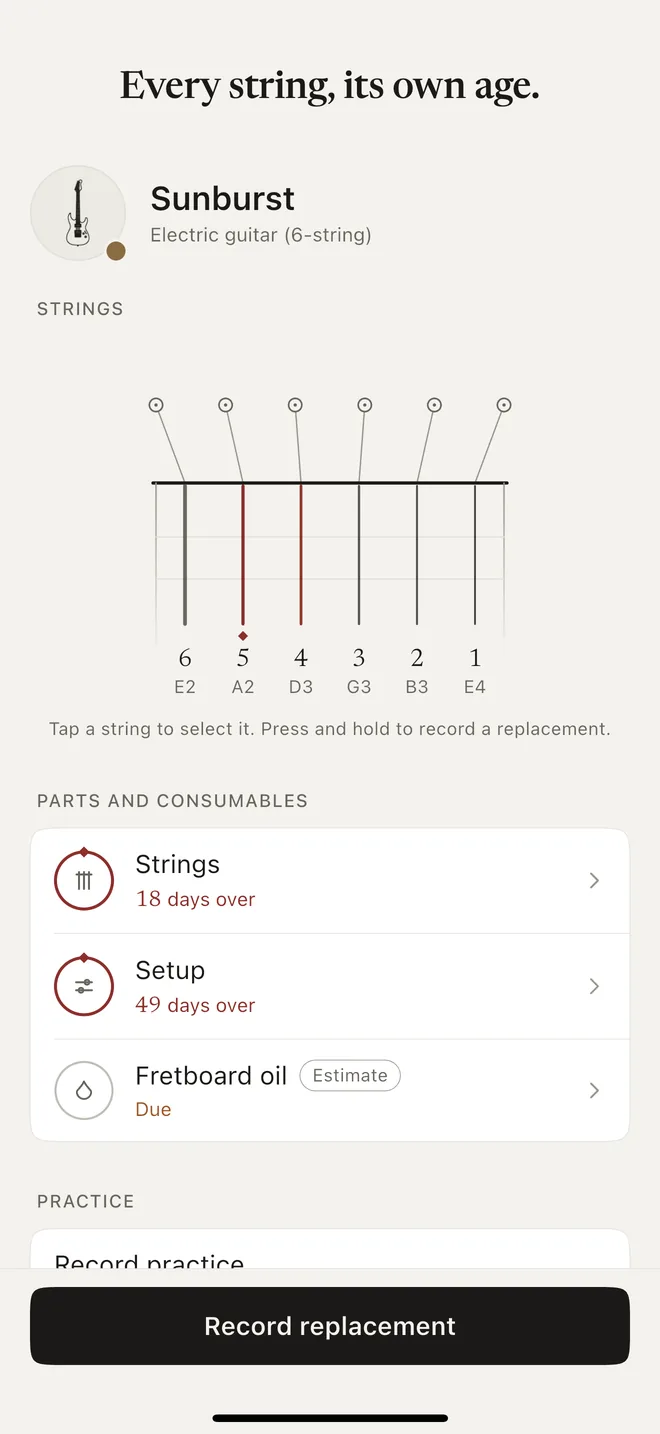
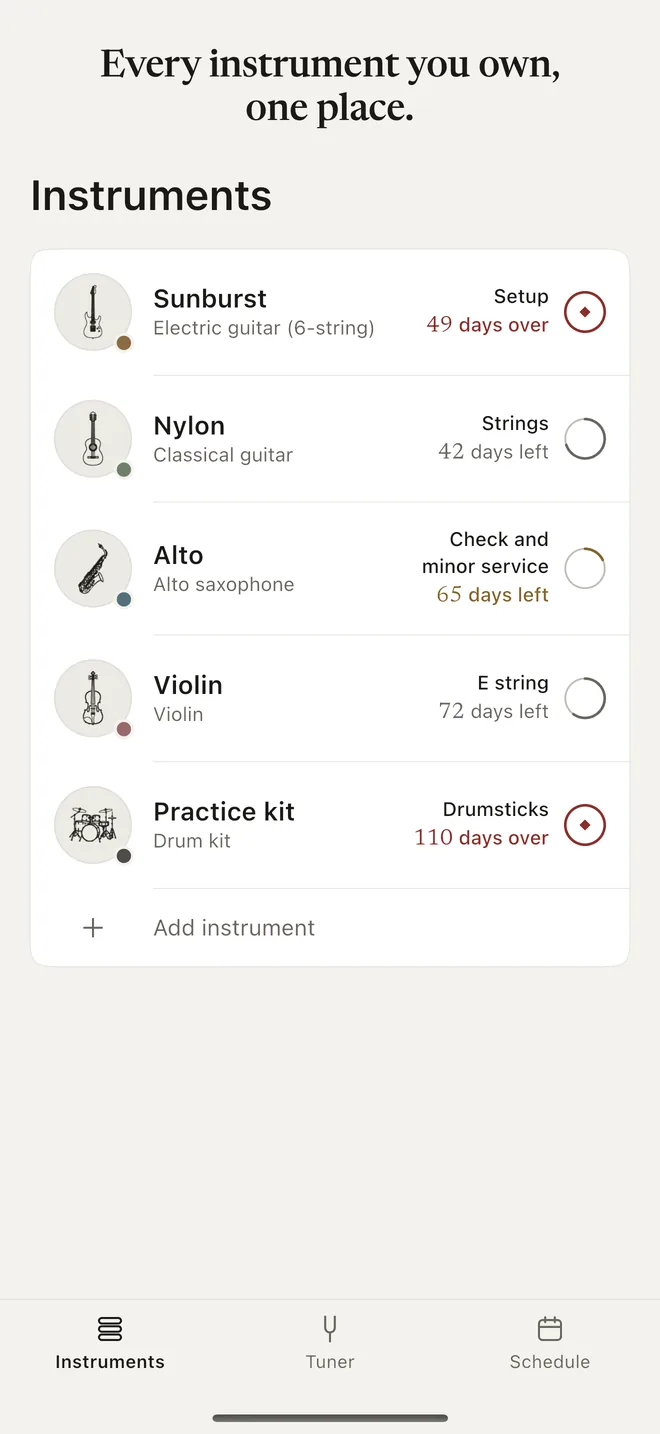
- Strings one by one, reeds one by oneAfter a partial change it still tracks the rest of the set. Reeds are numbered, rotated and shown with their break-in day.
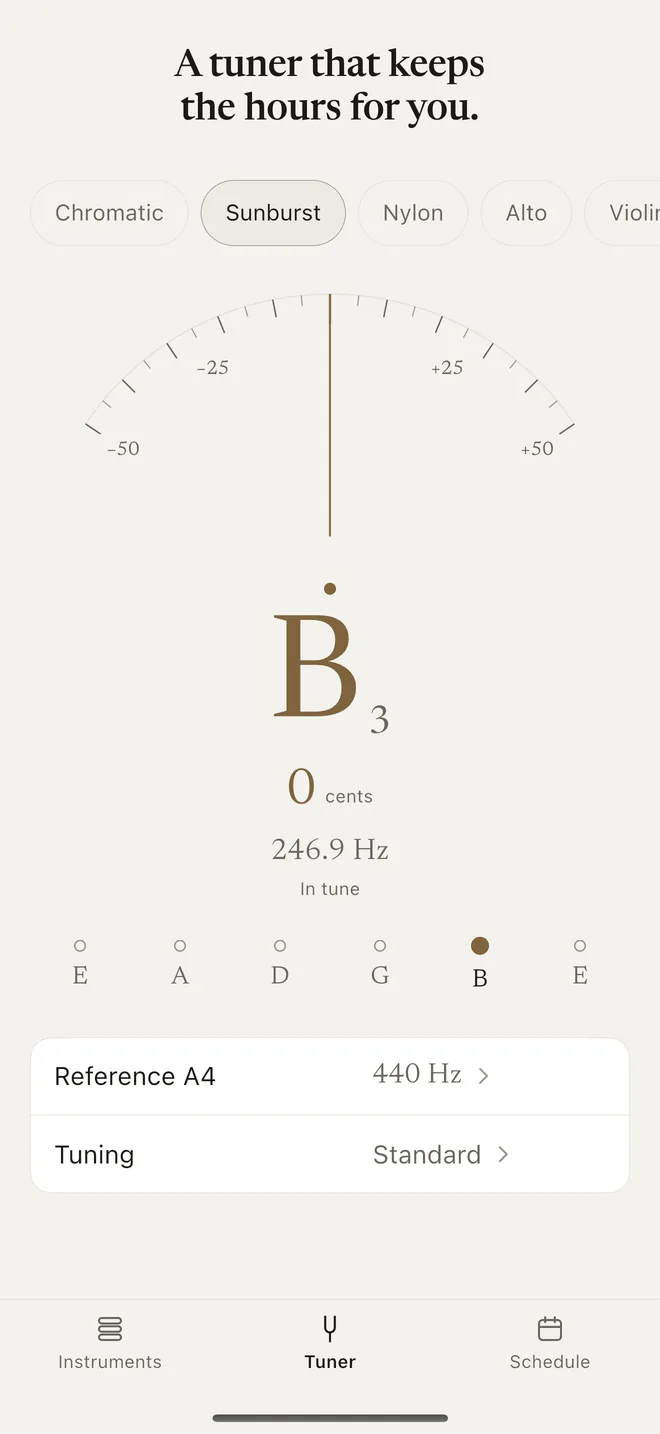
- Hours without the bookkeepingTime on the tuner counts as practice. A Shortcut or an NFC tag on the case can start a session as you open it.
- Timed to your performanceEnter a concert and the change goes on the schedule, with the lead time that suits the string type.
- Widgets and PDFWhat is due next, on the home screen. A PDF record for your repairer or your insurer.
- Free for two instrumentsLuthora Pro is a single purchase for all your instruments. There is no subscription.
- 20 languages, iPhone and iPadiOS 17 or later. On iPad the rack goes multi-column with a split view.
The download link will appear here once the app is live.
Questions
About changing strings
Do strings age even when I am not playing?
Yes. Metal strings under tension keep oxidising from humidity and whatever sweat is left on them, and synthetic strings slowly change character under tension too. That is why there is a calendar figure alongside the playing-hours figure, and why the earlier of the two decides when a set is due.
If one string breaks, can I replace just that one?
You can. The new string will sound brighter than its neighbours for a while, which some players notice. Change the whole set before a performance; for everyday practice one string is fine. Luthora records each string with its own age, so after a partial change it still tracks the rest of the set correctly.
Do I have to log every practice session?
No. Set a rough number of hours per week once and the app estimates from there. In Luthora, time spent on the tuner is recorded as practice automatically, and a Shortcut or an NFC tag can start and stop a session for you.
How far before a concert should I change strings?
New strings need time to stretch and settle. Change steel strings about 2 days before, nylon or fluorocarbon about 5 days before, and synthetic-core orchestral strings about 7 days before. Luthora counts back from a performance you enter and puts the change on your schedule.